

Take a breath. You are not expected to know everything before you begin. Clinical placement is where you start connecting what you’ve learned in the classroom to real patients, real situations, and real clinical environments. The goal isn’t perfection; it’s to learn, practice, ask questions, and grow more confident with each shift.
More importantly, you are about to deal with vulnerable people. You MUST put yourself in their shoes and understand that more often than not, they need you (otherwise, they wouldn’t be there for you to provide them with care). You are the last line of defence before treatments reach the patient.
Here are 10 things worth knowing before you begin placement.
1. Review the Basics Before Your First Day
Your first day is likely to be heavily focused on orientation, introductions, policies, procedures, and getting familiar with your new environment. You don’t need to spend the night before re-reading every nursing textbook.
Instead, use your prep time as an opportunity to refresh the fundamentals you’ll begin applying as you transition into your role. As you move beyond orientation, consider reviewing:
- Vital signs and normal ranges
- Basic head-to-toe assessment
- Infection prevention and hand hygiene
- Medication safety principles
- Patient identification protocols
- Documentation basics and charting systems
- Common clinical terminology
- Relevant anatomy and physiology for your unit and patient population
You won’t remember every detail the moment you arrive, and that’s fine. This review just gives you a foundation to build on once you’re applying it in real time.
2. Know What to Bring With You
A little logistical preparation goes a long way toward reducing first-day stress. Confirm your program’s specific requirements, but common essentials include:
- Your required uniform or clinical attire and appropriate footwear
- Student ID and any required documentation
- A stethoscope, penlight, or other required equipment
- A watch with a second hand, for manual vitals
- A small notebook and pen for notes throughout the shift
- Things like water, since breaks can be unpredictable
Don’t rely on someone else’s packing list; check with your instructor or facility ahead of time. Arriving prepared and on time is one less thing to worry about when you’re already processing a lot of new information.
3. Know Which Clinical Skills You Should Be Comfortable With
Before placement, take stock of the skills you’re expected to perform or understand at your level. Depending on your program, this might include:
- Taking and recording vital signs
- Performing basic patient assessments
- Understanding blood glucose monitoring and readings
- Assisting with mobility and positioning
- Maintaining infection prevention practices
- Communicating with patients and the care team
- Basic documentation
You don’t need to be an expert at any of these. But you should be clear on what you know, what needs more practice, and what you’re not yet prepared to perform independently. Always follow safety guidelines and your school’s and clinical site’s policies, which are non-negotiable. Knowing your limits and asking for guidance when needed are essential parts of becoming a safe practitioner.
4. Know What to Expect When You Arrive
Your first day may not look exactly like you imagined. Expect orientation, introductions to your instructor or preceptor, a walkthrough of the unit, and a fair amount of observing before you’re doing much hands-on work.
You’ll also spend time learning things that seem small but matter, like:
- Where supplies are kept
- How the unit is organized and how the team communicates
- How patient information is accessed
- Where to obtain the patient assignment
- Who to approach with questions
- Where and how documentation is completed
- What your specific responsibilities are as a student
Permit yourself to observe, as well as offer assistance where capable. You’re learning a new environment as much as you’re learning new skills, and both take time.
5. When You Don’t Know Something, Say So
One of the most important lessons you’ll learn in clinical placement is that not knowing something is not the same as being incompetent.
You’ll encounter situations you’ve never seen before, hear terminology you don’t recognize, and get asked questions you can’t answer right away. Don’t guess or pretend to know something because you’re afraid of looking inexperienced. Not speaking up is far more risky than feeling embarrassed about not knowing something. Overconfidence can lead to serious consequences, including medication errors, incorrect procedures, and patient harm.
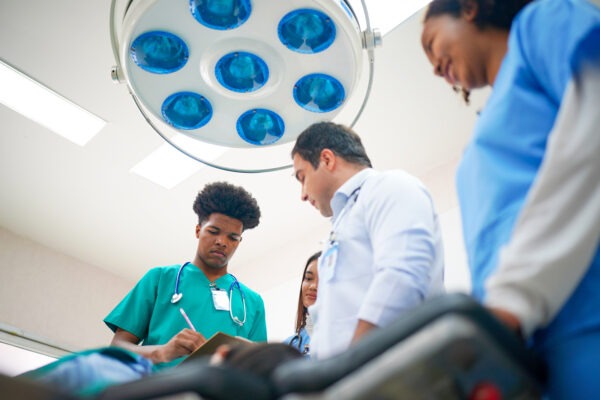
Instead: pause, ask, verify, learn. When you ask questions, be willing to work toward finding the answers as well. Nursing involves developing autonomy, and part of that process is learning how to seek guidance while also taking responsibility for your own learning. Knowing when to ask for help, verifying what you’re unsure about, and building your knowledge are all essential parts of becoming a safe and confident practitioner.
6. Communicate Clearly with Your Preceptor or Instructor
Your preceptor or instructor can’t read your mind; if you’re unsure about something, say so. Clear communication early on sets the tone for how much you’ll get out of the placement.
A few things worth asking or saying directly:
- “I’m familiar with the theory, but I haven’t performed this skill independently yet. Can we please do it together, or could you please join me? “
- “These are the steps I plan to take to perform this skill. Am I missing anything?”
- “I’d like to practice this skill. Do you think this would be an appropriate opportunity based on the patient’s needs and my current level of experience?”
- “How would you like me to keep you updated?”
This kind of communication helps your preceptor understand where you’re at and how to support you. It also shows that you’re taking ownership of your own learning.
7. Ask for Opportunities to Practice Skills
Learning opportunities don’t always appear automatically, especially on a busy unit. If there’s a skill you want to build, say so. Try something specific, like: “I haven’t had a chance to practice a dressing change yet, could I try the next one with you?” Naming exactly what you want to work on makes it much easier for your preceptor to coordinate that opportunity for you.
At the same time, remember that patient safety always comes first. Not every situation will be the right one for a student to take the lead. The goal isn’t to rack up as many skills as possible; it’s to practice the right skills, in the right situations, with the right supervision. You also want to make sure the patient is comfortable with you trying this on them as well.
8. Prepare Yourself Mentally for Making Mistakes
You will likely make mistakes during your clinical learning experience. That doesn’t mean you’re failing; what matters is how you respond. A mistake or near-miss can become a chance to identify a gap in your knowledge, ask for clarification, and improve your practice going forward. Your job is to take accountability. This means: communicate honestly, follow your program’s and clinical site’s procedures, and take the lesson with you. What are you going to do or not do next time?
Try not to let one difficult moment turn into a verdict on your entire ability as a future nurse. Instead of thinking “I’m terrible at this,” try asking “What can I learn from this, to ensure I minimize the chances of this ever happening again?” Clinical placement isn’t a test of whether you already know everything; it’s part of the process of becoming a safer, more capable practitioner. Even experienced nurses make mistakes and keep learning from them.
9. Don’t Wait Until You’re in a High-Stakes Situation to Practice
There’s a big difference between understanding a skill in theory and actually feeling ready to perform it. Reading about a procedure helps. Watching someone demonstrate it helps more. But deliberate, hands-on practice is what actually builds familiarity and confidence.
Take advantage of skills labs, simulation, demonstrations, and supervised opportunities whenever they come up. More importantly, understand WHY you are being asked to perform a certain step, and connect it to something you already understand well in your mind or in past experience. This is how the info sticks. These lower-stakes environments give you room to slow down, ask questions, repeat a skill, and learn from mistakes before you’re relying on that skill during a busy shift or an unstable patient situation. You shouldn’t have to wait for a high-pressure moment to discover what you don’t know yet; it’s much better (and safer) to find that out early, with support close by.
10. Turn Your First Placement Into a Foundational Learning for Future Clinical Experiences
Your first clinical placement is more than a requirement to check off. It’s a chance to start discovering how you learn best, where you need more practice, and what kind of nurse you want to become.
After each clinical day, take a few minutes to reflect. (You’re almost 100% likely to have required submissions that make you do this anyway!):
- What did I learn today?
- What went well, and what challenged me?
- What skill do I want to practice again?
- What question do I still have?
- What will I do differently next time?
You don’t have to improve everything at once; choose one or two areas to focus on and build from there. Asking “why,” not just “how,” and following your reasoning through each task will help turn routine work into real clinical judgment over time. The same mindset applies to your interactions with other staff, peers, patients, family members, and your preceptor or instructor. Each interaction is an opportunity to learn, communicate more effectively, and build confidence.
You Will Not Know Everything on Day One
Or even by the end of your first placement, for that matter. Your first clinical placement will push you outside your comfort zone. That’s normal. You’re entering an environment full of new people, vulnerabilities, new routines, new responsibilities, and situations no classroom can fully prepare you for.

So permit yourself to be an active learner. Prepare. Practice. Ask questions. Figure out where to find answers. Speak up when you’re unsure. Reflect on what you experience. Again, what would you hope is done for you or your loved one if you were in the position of the person you are caring for? It is so much easier to be empathetic when we keep this in mind. Your patients feel it and usually put more trust in your care.
Confidence doesn’t usually arrive before you begin (and to be honest, it shouldn’t); it develops through effort (preparation and practice), humility (feedback and questions), and supportive learning. Your first clinical placement isn’t about proving you already know everything. It’s about beginning to safely apply what you’ve learned into practice.
Need more time to practice before clinical?
Nurse Decoded offers hands-on clinical skills practice for nursing students who want additional time with equipment, procedures, and clinical scenarios in a supportive learning environment.
Explore Clinical Skills Sessions → https://nursedecoded.com/coaching/